
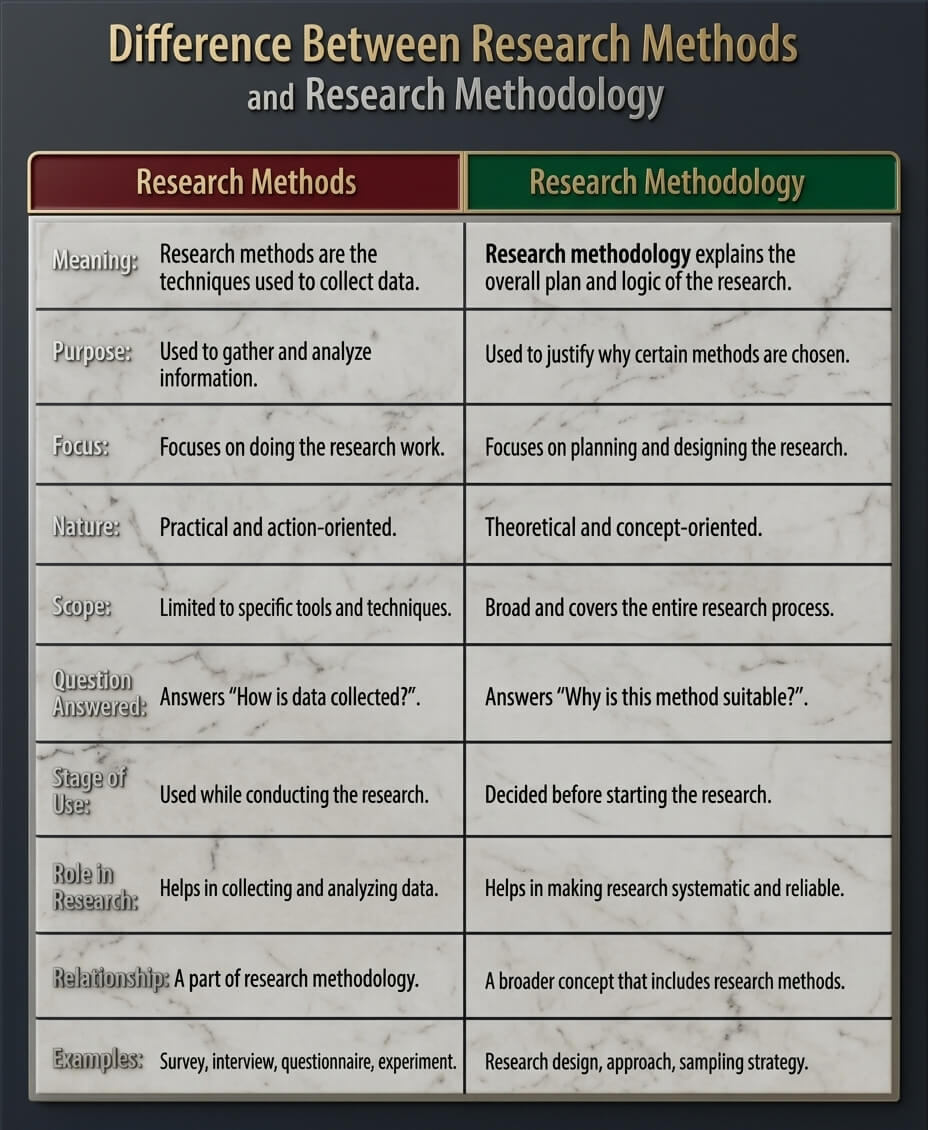
One of the most common points of confusion for research scholars, PhD candidates, and early-career researchers is distinguishing between Research Methods and Research Methodology. While closely related, the two terms serve entirely different functions in academic inquiry.
Research Methods: The Tools
Research methods are the specific techniques, procedures, and tools used to collect, analyze, and interpret data in order to solve a research problem.
Common examples:
- Data collection: surveys, structured interviews, questionnaires, field experiments
- Data analysis: statistical tests (ANOVA, regression analysis), qualitative thematic coding, algorithmic models
Research Methodology: The Logic
Research methodology is the overarching framework, logic, and theoretical basis that guides a study. It provides the rationale behind operational decisions and ensures the research is scientifically sound and repeatable.
Key questions methodology answers:
- Rationale: Why was a specific method chosen over the alternatives?
- Design fit: Why is this research design appropriate for these questions?
- Systematic process: How should the study be structured to minimize bias and ensure validity?
- Sampling: Why is a particular sampling strategy or sample size suited to this population?
The Distinction at a Glance
| Aspect | Research Methods | Research Methodology |
|---|---|---|
| Focus | Specific tools and techniques | Overall plan, strategy, and rationale |
| Core question | How data is collected and analyzed | Why those methods were chosen |
| Scope | A subset of the methodology | The complete research framework |
| Analogy | The hammer and saw | The architectural blueprint |
Key takeaway: Methods are the tools in the toolkit; methodology is the systematic plan and justification for choosing and using those tools.
Why This Distinction Matters
Mastering this difference helps researchers produce stronger:
- Research proposals
- PhD dissertations and theses
- Peer-reviewed journal manuscripts